Day 0
New product
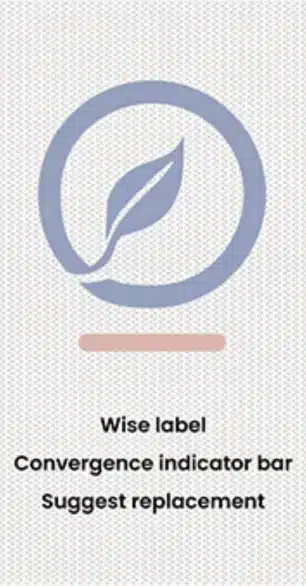
Original color — the baseline.
When a product leaves the factory, the WiseLabel label shows its starting color. This is the reference state — the product is new, and nothing has been triggered yet.
The Technology
WiseLabel uses responsive material chemistry to create a controlled, visible color change over the life of a textile product — giving customers a replacement reminder without apps, scanning, or external systems.
The four stages
Day 0
New product
When a product leaves the factory, the WiseLabel label shows its starting color. This is the reference state — the product is new, and nothing has been triggered yet.
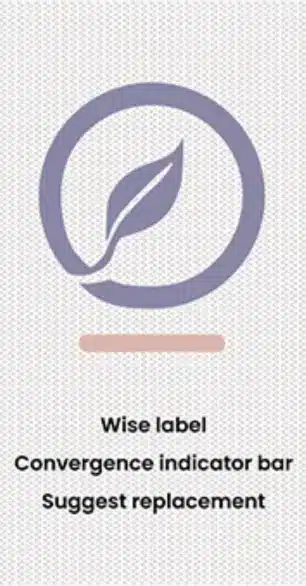
~15 washes
Active use
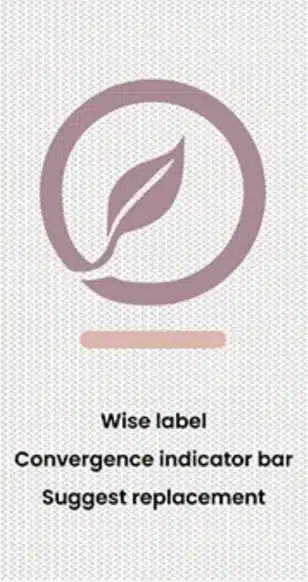
Washing, light, friction, and daily use begin to drive the color transition. The change is subtle at first — most users won't notice unless they compare to a new product. That's by design.
~45 washes
Approaching limit
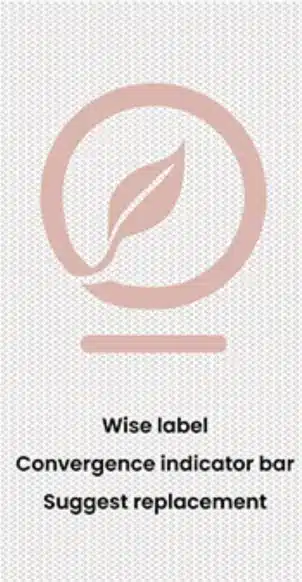
As the product nears its replacement threshold, the color shift becomes clear and intentional. Users start to see and notice the change — especially if they've seen the product when it was new.
90+ days
Replace now
The label has completed its full color journey. The replacement message is now clear, visible, and on the product itself — no app, no external reminder, no guesswork.
The science behind it
WiseLabel uses formulations that react predictably to water exposure, mechanical friction, UV light, and oxidation — variables that occur in any normal product use cycle.
The color transition timeline is tuned for each textile category. Underwear, towels, and babywear have different replacement rhythms — the label is calibrated to match.
All materials are certified non-toxic and skin-safe under OEKO-TEX standards — including for close-to-skin and baby products.
WiseLabel integrates with existing care label workflows. Custom colors, formats, brand layouts, and care-label combinations are all supported.
Patent-pending chemistry
Three independent chemical mechanisms work together — each one responding to real textile conditions, not just time elapsed.

Repeated wet–dry cycling causes mechanical stress at the molecular level. Oxidation reactions triggered by water, detergent, and heat drive irreversible changes in the chromophore bonds.

Hydroxyl (OH·), superoxide (O₂⁻), and nitric oxide (NO·) radicals in ambient air interact with the label chemistry during drying and storage — adding a time-based degradation layer.
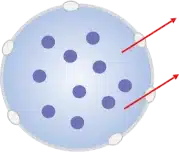
A leuco dye system encapsulated in a polymer matrix is calibrated per textile category — tuning the transition speed for underwear, towels, babywear, or hospitality linen with precision.
Common questions
No. The transition is designed to be one-directional and permanent once triggered. This is intentional — reversibility would undermine the replacement message.
Yes. The calibration accounts for the typical wash conditions in each product category. Most consumer textile categories wash at 30–60°C, and WiseLabel is designed for this range.
The primary trigger is wash exposure, but heat, friction, and light are also factors. Products that are worn without washing will still progress, but at a slower rate.
Yes — the timeline is one of the key OEM customization options. Different brands may want 3-month, 6-month, or annual replacement cycles depending on category.
See it for yourself
Physical samples are the fastest way to evaluate whether the logic fits your category. No commitment required.